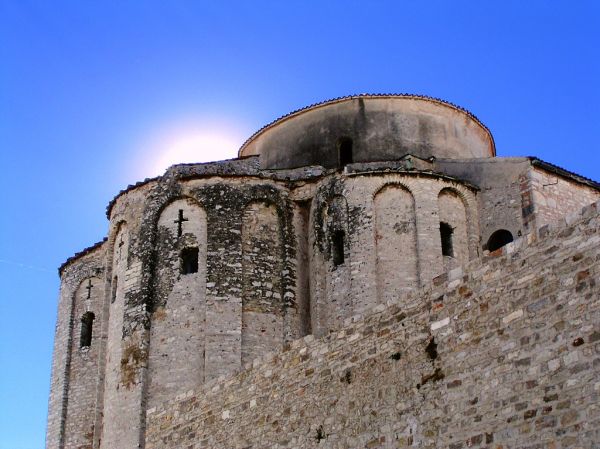
| Address | Zadar 23000, Croatia |
|---|---|
| Coordinates | 44.1158, 15.2251 |
| Category | City, Planning, Culture |
| Nearest city | Regional hub - biggest city in its area |
| Region | Zadar, Croatia |
| Sources | geonames |
Zadar Travel Guide: Best Things to Do
Zadar is a city in Zadar, Croatia, home to about 67,309 residents. This guide covers how to visit it, what to expect and how to build a day around it.
Zadar at a Glance
- What it is: city (City)
- Where it is: Zadar 23000, Croatia — coordinates 44.1158, 15.2251
- Why it is listed: a source-verified entry in the CollabsTravel master database, matched against official gazetteer and geographic records before publication
- Time needed: one full day
- Best season: April-May and September-October for mild days and thinner crowds
Quick Facts
| Place type | City |
| Primary category | City |
| Also good for | Planning, Culture |
| County / region | Zadar |
| Region / state | Zadar |
| Country | Croatia |
| Postal address | Zadar 23000, Croatia |
| Population | 67,309 |
| Coordinates | 44.1158, 15.2251 |
Why Zadar Is Worth Visiting
Zadar earns its place in this guide for a simple reason: it is a verified city in Zadar, Croatia, at about 67,309 residents it keeps the scale travellers usually mean when they say they want somewhere off the beaten path. With 8 other verified places within 150 km, it anchors a cluster instead of standing alone. Visitors book it for planning, culture as much as for city. And unlike listicle recommendations, everything on this page - coordinates, category, sources - was checked against official records before publication.
About Zadar
In plain terms, Zadar is a city in the Zadar area of Zadar, Croatia that travellers book around city trips. It is a settled place of about 67,309 people, which means shops, fuel and basic services exist locally rather than only in the next county. Beyond its main draw, the record tags it for planning, culture too, so it rewards more than one kind of visit. Postal addressing runs through Zadar (23000). Everything stated on this page comes from that verified record; where background history is quoted, the source is named at the end of the section.
The Story of Zadar: History & Background
Zadar (US: ZAH-dar, Croatian: ), historically known as Zara (from Venetian and Italian, pronounced ; see also other names), is the oldest continuously inhabited city in Croatia. It is situated on the Adriatic Sea, at the northwestern part of Ravni Kotari region. Zadar serves as the seat of Zadar County and of the wider northern Dalmatian region. The city proper covers 25 km2 (9.7 sq mi) with a population of 75,082 in 2011, making it the second-largest city in Dalmatia and the fifth-largest in the country.
Zadar traces its origins to the 9th century BC as a settlement of the Illyrian tribe of the Liburnians, called Iader. In 59 BC, it was renamed Iadera (Jadera) when it became a Roman municipium. In 48 BC, it became a Roman colony. During Roman rule, Zadar acquired the characteristics of a traditional ancient Roman city, with a regular street grid, a public square (forum), and an elevated capitolium with a temple. After the fall of the Western Roman Empire in 476 AD, Zadar became the capital of the Byzantine Theme of Dalmatia.
At the beginning of the 9th century, Zadar briefly came under Frankish rule. In 998, the city swore allegiance to Doge Pietro II Orseolo and became a vassal of the Republic of Venice. In 1186, it placed itself under the protection of the Hungarian King Béla III. In the Middle Ages, Zadar's population was predominantly Romance and the Dalmatian language was spoken, later largely replaced with related Venetian, which would remain the principal language spoken in the city until the 20th century.
In 1202, during the Fourth Crusade, the Venetians, with the help of the Crusaders, reconquered and plundered Zadar. The Kingdom of Hungary gained control of the city following the Treaty of Zadar in 1358, when it was taken by King Louis I. In 1409, King Ladislaus of Naples sold Dalmatia back to Venice, and Zadar became the de facto capital of Venetian Dalmatia. When the Ottoman Empire conquered the Dalmatian Hinterland in the early 16th century, the city became an important stronghold safeguarding Venetian trade in the Adriatic, as well as the administrative and cultural center of Venetian possessions in Dalmatia. This fostered an environment in which art and literature could flourish, and between the 15th and 17th centuries Zadar came under the influence of the Renaissance, producing many important Italian Renaissance figures such as Giorgio Ventura and Giovanni Francesco Fortunio, who wrote the first Italian grammar, as well as many Croatian writers, including Petar Zoranić, Brne Krnarutić, Juraj Baraković, and Šime Budinić, who wrote in the Croatian language. After the fall of the Venetian Republic in 1797, Zadar briefly came under French administration as part of the Illyrian Provinces. From 1815 to 1918 it served as the capital of the Kingdom of Dalmatia, a crown land of the Austrian Empire (and later Austria-Hungary). Throughout the 19th century, the city became one of the centres of the Illyrian movement amid the growing polarisation and politicisation of ethnic identities between Croats and Dalmatian Italians, the latter forming a majority of Zadar's citizens.
Under the Treaty of Rapallo in 1920, Zadar became part of the Kingdom of Italy. During World War II, it was bombed by the Allies and witnessed the evacuation of its ethnic Italian population. The Partisans captured the city on 1 November 1944, and in 1947 it officially became part of the Socialist Republic of Croatia (a federal constituent republic of Yugoslavia). It was then repopulated by new settlers, mainly from the surrounding islands and from the hinterland. After the breakup of Yugoslavia, in 1991 Zadar became part of the Republic of Croatia.
Today, Zadar is a historical center of Dalmatia, Zadar County's principal political, cultural, commercial, industrial, educational, and transportation centre. Zadar is also the episcopal see of the Archdiocese of Zadar. Because of its rich history and cultural heritage, Zadar is today one of the most popular tourist destinations in Croatia, named the "entertainment center of the Adriatic" by The Times and "Croatia's new capital of cool" by The Guardian.
UNESCO's World Heritage Site list included the fortified city of Zadar as part of the Venetian Works of Defence between the 16th and 17th centuries: Stato da Terra – Western Stato da Mar in 2017.
Lead passage from the Wikipedia article "Zadar", reused under CC BY-SA 4.0 with a coordinate-verified name match; the source article carries the full referenced history.
The Beauty of Zadar
What people mean when they call Zadar beautiful is usually street life: main-street architecture, local signage and the evening rhythm that makes a town photogenic rather than just populated. The light does most of the work: mid-latitude light gives the place two looks: clean blue summer noon and a low amber angle in spring and autumn. The seasons restyle everything around it - stone and brick hold their colour year-round; what changes is crowd density and the angle of light down the main streets. And the beauty compounds with context: with 8 other verified places nearby, the Zadar area reads as one continuous landscape rather than a single viewpoint, which is worth more than any filter on the photos you take here.
Getting There
Zadar sits at 44.1158, 15.2251 in Zadar, Croatia. Most visitors reach it by car, regional rail or local transit; pin the coordinates above rather than only the name - Zadar names repeat across regions, and rural entries often lack street addresses.
The nearest postal locality is Zadar (23000), which is what local directions and navigation apps will reference.
Best Time to Visit
Late spring to early autumn (May to September) brings the warmest and most reliable conditions across Croatia. Shoulder months just before and after that window trade a little weather for noticeably lower prices and thinner crowds.
Zadar Season by Season
- Summer (Jun-Aug) - peak season: the warmest, longest days and everything open, which also makes it the priciest and busiest window
- Autumn (Sep-Nov) - shoulder season: crowds drain away, the light turns photographic, and lodging rates typically fall
- Winter (Dec-Feb) - off-season: cheapest beds and empty viewpoints, but check for closures, snow or rain before committing
- Spring (Mar-May) - rebuild season: wildflowers, newborn wildlife and reopened facilities - the best balance if the weather holds
Things to Do
Planning what to actually do at Zadar comes down to the setting it sits in:
- Arrive with the exact coordinates (44.1158, 15.2251) pinned in your maps app — rural place names repeat across states
- Cluster the old downtown/core district on foot and save the car for outlying attractions
- Check the city's event calendar the week before — festivals redefine parking and hotel rates
- Look for the free walking-tour or visitor centre as the fastest orientation
- Chain the stop with what is nearby — see the list below before fixing your day route
None of this needs a rigid schedule - the honest pattern at Zadar is one anchor at the historic core or main square, one longer stop, and the rest of the time left for whatever looks better from the car window. That flexibility is what separates a good half-day from a rushed one.
A Perfect Day in Zadar
Morning (start early). Have breakfast at Zadar and roll out before mid-morning - the light is softer, parking is open, and Zadar is at its quietest before the day-trippers arrive. Give the main stop its full due first rather than saving it for later.
Midday. From Zadar, Bibinje is only 7 km away - pair the two rather than driving home for lunch; a picnic beats a reservation near most of these spots.
Afternoon. Keep going to Lamjane Bay (9 km) if the group still has legs; it is the standard second half of this loop.
Golden hour. End at the main viewpoint, waterfront or main street as the light drops; this is the hour Zadar is genuinely famous for locally, and it costs nothing.
Evening. Sleep at Zadar unless the road out is long - leaving at dusk is the one mistake that can flatten an otherwise perfect day.
Know Before You Go to Zadar
- Save the pin (44.1158, 15.2251) offline - reception in Zadar is exactly as good as it needs to be and no better
- Check the official source listed at the bottom of this page for current hours, fees and closures before driving out
- Weekend events and holidays reshape parking and opening hours; scan the local calendar
- Peak-season ticket slots sell out - reserve timed entry if one exists
- Urban scale changes the game: transit passes beat car rentals inside the centre
Nearby Places Worth Combining
Zadar does not sit in isolation - these verified places are all within a short hop and combine into a full loop:
- Bibinje — city, about 7 km (4 mi) away
- Lamjane Bay — waterfront, about 9 km (6 mi) away
- Sukošan — city, about 10 km (6 mi) away
- Vir — city, about 24 km (15 mi) away
- Biograd na Moru — city, about 26 km (16 mi) away
- Debelo Brdo — hiking, about 27 km (17 mi) away
- Bojinac — hiking, about 29 km (18 mi) away
- Veliki Golić — hiking, about 32 km (20 mi) away
Planning More of Your Trip
See everything in Croatia on the Croatia country hub, browse the full City Croatia collection, or take in the whole Zadar region.
Frequently Asked Questions
Is Zadar worth visiting?+
Yes, if you are in the area for more than a single day. Zadar is a verified city in Zadar, Croatia that most drive-by lists miss, and the official-record provenance behind this page means the location, name and access facts are checked rather than guessed. Give it one full day.
Where exactly is Zadar?+
Zadar sits at Zadar 23000, Croatia, coordinates 44.1158, 15.2251. The postal locality is Zadar - use the coordinates rather than the name alone, because place names repeat across regions and a map pin beats a keyword search.
How far is Zadar from the nearest city?+
The nearest named base on this guide is close enough that distance is not the constraint; the Quick Facts table lists the exact road-town km, and every place here is reachable as a same-day loop from a regional hub.
What is the best time to visit Zadar?+
April-May and September-October for mild days and thinner crowds. Book the shoulder months either side of that window for the same scenery at lower prices, and check seasonal closures before fixing dates.
How long do you need at Zadar?+
Plan on one full day for a first visit - the highlights at a normal pace without rushing. Add another half day if you want to combine it with the nearby places listed above.
Is Zadar good for families with kids?+
Yes - short distances, services nearby and the flexibility to bail after an hour all make Zadar a realistic family stop. The main kid-risk is over-scheduling: one anchor per day beats three.
Does Zadar cost anything to visit?+
Walking around Zadar is free; the museums, attractions and tours that make the visit deeper are paid, and booking timed entry online is almost always cheaper and always faster.
What is near Zadar?+
The closest verified neighbour is Bibinje; the nearby list above has the full set with distances, and combining two or three of them is the standard way to fill a day around Zadar.
Is Zadar open to visitors, and do you need a permit?+
Public places listed here are visitable by default; the permit exceptions are usually specific activities (backcountry camping, drones, commercial photography) rather than the visit itself. Check the cited official source for anything activity-based.
Should you visit Zadar in bad weather?+
Rain reshapes rather than ruins the day - viewpoints become cloud-scapes and trails get muddy. Keep Zadar as a fair-weather item on your trip and swap in the covered alternatives from the regional list when the forecast turns.
What makes Zadar different from other places like it?+
Its exact combination: a city in Zadar, Croatia with verified coordinates and, where listed, an official designation. The difference is usually the setting and the access pattern rather than the category label - the facts table on this page shows that specifically.
Can you visit Zadar as a day trip?+
Yes - at one full day on site, a day loop is realistic: morning at Zadar, one nearby stop, and home by evening. The Perfect Day section above has the hour-by-hour version.
What is Zadar known for?+
In the wider record, city-class place: Zadar (US: ZAH-dar, Croatian: ), historically known as Zara (from Venetian and Italian, pronounced ; see also other names), is the oldest continuously inhabited city in Croatia. This guide adds the practical layer - verified coordinates, access, seasonality and what to combine it with.
What is the most beautiful thing about Zadar?+
The honest short answer is in The Beauty of Zadar section above, but distilled: what people mean when they call zadar beautiful is usually street life: main-street architecture, local signage and the evening rhythm that makes a town photogenic rather than just populated. Come for the light and the setting rather than a single checklist object.
Is Zadar crowded?+
Zadar sits below the headline-name tier in its region, so crowding is an event-and-weekend problem rather than a standing one. Weekday mornings in the shoulder season are the quietest version of the visit.
What is the history of Zadar?+
The sourced background above places documented events for Zadar around 2011 at the earliest point its article dates; for the full timeline with references, the linked Wikipedia article is the primary trail and this guide keeps the practical travel layer on top of it. ## Source Verification This guide's facts come from official public datasets: [Geonames record 3186952](https://www.geonames.org/3186952). Location data is reviewed in per-state batches before publication.
Nearby destinations
Old town square
Landmark · Zadar ·
Five Wells Square
Landmark · Zadar ·
Bibinje
City · Bibinje · Zadar
Lamjane Bay
Waterfront · Kukljica · Zadar
Sukošan
City · Sukošan · Zadar
Vir
City · Vir · Zadar